Film vs movie
Film vs movie is a comparison of two English words for the same art form: a feature-length work of recorded moving images, with film the international and trade term and movie the everyday American word, and the two are interchangeable in 9 out of 10 everyday contexts, with the difference being register, not substance. The clearest split is that film carries the historical, technical and global meaning, while movie carries the casual, American and box-office meaning.
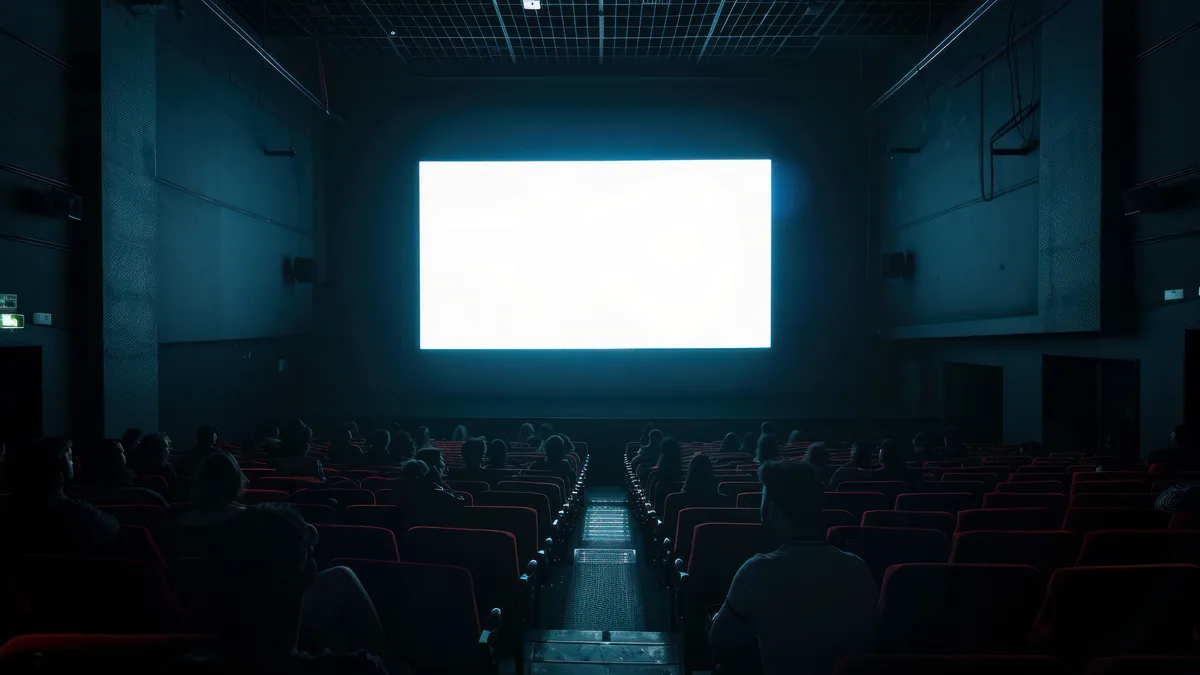
The words point in different directions. Film traces back to the physical material: the strip of celluloid on which 24 frames per second are laid down, each frame 1.5 to 3 inches wide depending on the format. Movie traces back to the experience: motion pictures as an outing, which is why movie theatre, movie star and movie night all survive while their film equivalents feel stiffer. If you want the full material story, from celluloid to cut, that is covered in What film is, from celluloid to cut. For the taxonomy side, the page that sorts the major buckets is Film genres, defined. For the surface texture that gives a negative its fine speckled look, see Film grain, explained. For the whole production chain, from the first scout to the final mix, see The craft of film, end to end. Each of those pages stays inside its own lane; this one stays inside language.
Film vs movie: the same work, two words
Film vs movie settles as a synonym question: yes, they name the same object, which is why the British press, the Hollywood trade papers and most of the rest of the world all pass the test. The American film industry itself blurs the line, because the industry body calls itself the Motion Picture Association even though every pitch deck, festival and market it runs speaks of films. The test that separates the two words is venue: say movie in a ticket booth, say film in a film school, and both sentences sound correct. A movie is what you watch on a Friday; a film is what is archived, restored and remastered, and the word carries the object with it, so 35mm film and 70mm film keep their names while 35mm movie sounds wrong. The split is not new: movie has been in American use since the 1890s, film since around 1900 in the sense of the medium, and the two have raced for the same seat ever since.
Film vs movie vs cinema
Film vs movie vs cinema adds a third word, and the difference is provenance, not meaning: film is the English word, movie is the American casual word, and cinema is the loanword from the French, which is itself short for the Cinématographe, the portable projector that the Lumiere brothers used to show 35mm films in public from 1895. The three words split by region and by register. Cinema dominates in France, the UK, the Commonwealth and any discussion of the art form itself, such as the Cannes Film Festival, the Venice Film Festival and the British Film Institute, while film holds the trade and archive worlds and movie holds American everyday speech. A quick map, then, keeps the three apart: the object is the same, the audience for each word is different, and a sentence can carry all three without contradiction, as in the line that a movie from Cannes is a film shot on 35mm and shown at a cinema.
Is film and movie the same?
Is film and movie the same: yes, in the sense that both words refer to the identical work, and no, in the sense that the words carry different registers, so the grammatical fix is that film and movie are the same, and the choice between them is a style choice, not a factual one. If a script calls the work a movie, the finished print is still a film, and the cut that premieres as a movie in Los Angeles opens as a film in London. The one hard rule: the material side always uses film, because 35mm movie is not a phrase any lab would answer to.
Which word fits where
Which word fits where comes down to three arenas, and the word that sounds right in each is different. In the industry, film wins: film festival, film market, film rights, film stock and the trade press all treat film as the default, so a deal for the film rights to a novel is the phrase that closes transactions. In American consumer speech, movie wins: movie night, movie poster, movie star, the movie was great, all natural, with film feeling borrowed from the industry. In the art and academic worlds, cinema wins: film theory and cinema studies are the two departments, and the difference there is a genuine institutional split, with cinema carrying the European critical tradition and film theory carrying the Anglophone one. A compact map of the split, then, is this: the industry says film, the audience says movie, the academy says cinema, and the material says film in every language, because the strip of cells is what it is.
What language is a given movie in
What language is a movie in is a lookup question, and the answers for the titles people actually type are short. Kantara is a 2022 Indian film in the Kannada language, directed by R. Sarath Kumar and distributed by the UTV Motion Pictures banner, and it became the first Kannada film to cross 100 crore in worldwide box office collections. KGF is a 2018 Indian film, also in Kannada, the first chapter of a two-part saga from the Hombale Film's banner. Kaantha is a 2002 Indian film in the Tamil language, directed by S. Shankar, and it became one of the highest grossing Tamil films of its year. Toxic is a 2016 American film in English, the story of a mother who tracks down her son's killer after his release from prison. The pattern behind these four answers is that the language of a movie is the language of its production market, and the market, not the plot, decides which word you will hear: a Kannada movie is a Kannada film is a Kannada cinema work, and the language question has nothing to do with the film versus movie question except that both are metadata about the same object. A lookup table, then, keeps the four straight: the title is the key, the language is the value, and the year and the director are the two fields that confirm you have the right work when two titles share a name.
| Title | Language | Year | Director |
|---|---|---|---|
| Kantara | Kannada | 2022 | R. Sarath Kumar |
| KGF | Kannada | 2018 | Prashanth Neel |
| Kaantha | Tamil | 2002 | S. Shankar |
| Toxic | English | 2016 | Jay C. Scott |
How movie credits are made
How movie credits are made is a question about the final 3 to 12 minutes of any feature, and the answer is that they are written, negotiated and timed before the film is finished, not after. The credit sequence is built from three layers. The opening titles carry the production company logos, the director credit and the film's title card, and they are timed to the opening scene so the title lands on the first cut. The end credits are the long crawl, and the order is fixed by guild agreements and the Writers Guild of America and the Directors Guild of America, which set who appears first: the director, the writer, the producer, the cast in billing order, and then the crew in the standard job hierarchy, from director of photography and editor down to the 400 to 900 names in a large studio picture. The crawl speed is measured in lines per second, and a typical feature runs about 2 to 3 minutes of credits at the standard pace. The word movie in movie credits is the American usage; the trade and the guilds say film credits, and the distinction is register, not substance, because the same crawl plays in both.
How movie cigarettes and movie dvds are made
How movie cigarettes are made is a question about the prop, not the product, and the answer is that most are fakes, built to burn, curl and produce smoke without tobacco. A prop cigarette is typically a rolled plug of paper or a heat-resistant core that burns down and coils as it does, and the set keeps a supply of 50 to 200 per shooting day for a scene with smoking, because actors consume them fast and they are single use. Some scenes use heated alternatives that produce vapour instead of smoke, and a few use no prop at all, with the smoke added in a compositing pass. How movie dvds are made is the physical side of the same object: the master file is authored into a disc structure, the data is pressed onto a polycarbonate disc at a plant that can press 500,000 copies a shift, and each disc is printed with the cover art, the title and the region code, and a feature on dvd carries the same film, the same credits and the same language track, with the word movie in movie dvd being the retail usage and the word film being the archive usage, both pointing at the same 1.4 to 4.7 gigabytes of encoded picture and sound.
Best movie language translator, converter and app
Best movie language translator, converter and app is a tooling question, and the honest answer is that no single tool wins every job, because the three jobs are different. A translator is what you want for a line of dialogue: a translation engine that returns the meaning, and for a single line the best result comes from a large general purpose model, with the caveat that a model can miss the register, so a trade name or a slang term needs a human check. A converter is what you want for the file itself: the act of turning a dvd rip or a disc image into a playable video file, which is a conversion job, and the job is done by a transcoder, not by a language tool, so the word converter in this context means a format converter, not a language converter, and the two meanings are the same root with a different object. An app is what you want for subtitles on the fly: a player that loads an srt or vtt file and burns or overlays the translation as you watch, and a phone app that pairs the subtitle track with the audio in sync. The best pick, then, depends on which of the three jobs you actually have, and the job, not the brand, is the thing to name first, because a translator that converts files and a converter that translates dialogue are two different tools that people keep swapping.
Best movie languages to watch in
Best movie languages to watch in is a taste question, and the defensible list is short, because a language is worth its slot on a watch list only if its output is deep enough to fill a year. The shortlist is 6 languages, and the reason for each is the depth of the output, not the sound of the word. English is the default, with the largest annual output of feature films in the world. Hindi is the largest single language output in South Asia, measured in 100 to 200 feature films a year. Japanese has a long output of animated and live feature work, and the animated output alone is a deep catalogue. Korean has a modern wave of feature output that has driven the box office for a decade. The two South Indian languages, Tamil and Telugu, each produce 100 to 150 feature films a year and each has a long catalogue of classics that predate the modern wave, which is why the four lookup titles above split between Kannada and Tamil, the two sister languages of the same region, with Kannada carrying Kantara and KGF and Tamil carrying Kaantha. The list is a starting point, not a ranking, and the test for any language on it is simple: can you name 3 directors in it without looking, and if you can, the language earns its slot, because the depth of the output, not the novelty of the sound, is what keeps a language worth watching.