Film vs digital photography
Film vs digital photography is a comparison between two ways of recording light: film photography captures it as a chemical image on a rolled strip of celluloid, while digital photography captures it as electrical data stored as files on a memory card. The 2 differences that decide most of the argument are cost per picture and look: a roll of 35mm film yields 36 frames for roughly 12 to 25 dollars all in, and each frame carries grain, color shifts and highlight roll-off that sensors mimic but do not copy. Everything else, workflow, durability and the question of is film better than digital, hangs off those 2.
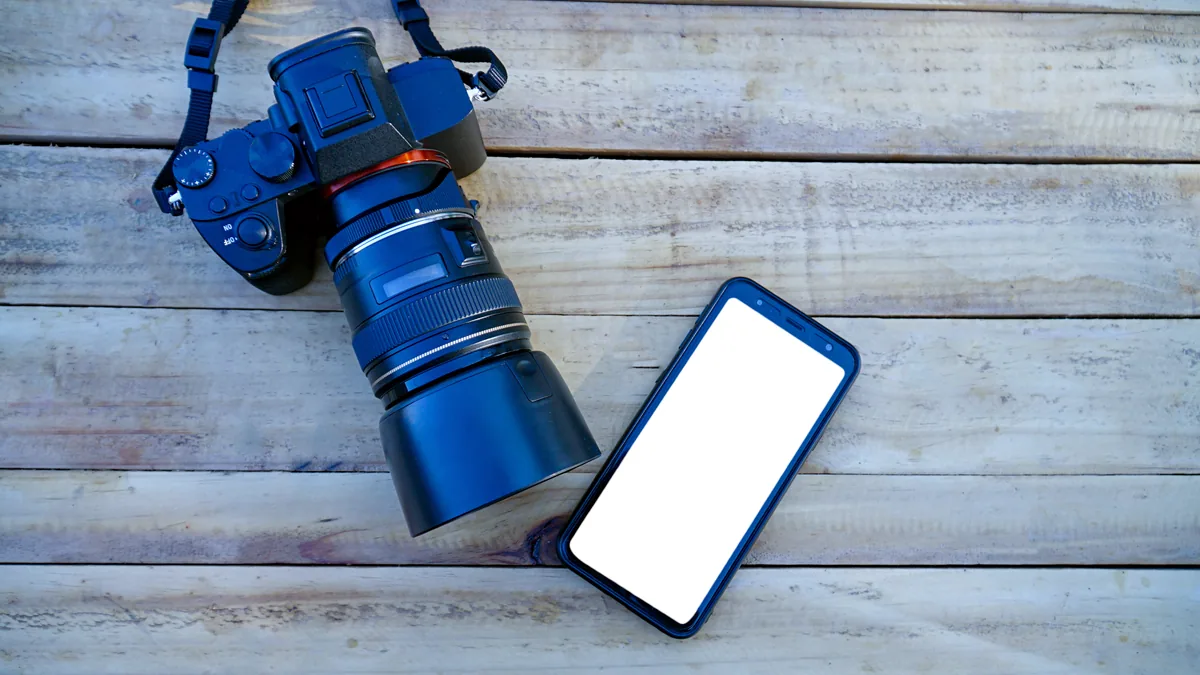
Universal, Lionsgate, Warner Bros and most of the rest of the major studios have moved their photography to digital; the medium of the frame now sits next to the medium of the record. The film that a camera rolls through and the movie that a studio ships to theaters are 2 objects that share a name, and sorting them apart is the first step in any honest comparison. Productions that shoot on celluloid still exist, from independents to big budget features, and every question a new shooter asks about either one ends up in the same few buckets: what it costs, what it looks like, and what the workflow does to the person behind the camera.
Why people choose film photography
People choose film photography for reasons that survive the price of a scan, and the 3 that come up most are ritual, texture and constraint. The ritual is mechanical: you load a roll in the dark, wind it, and the camera's shutter becomes the only pace you have for 36 shots, so framing decisions slow down. The texture is grain itself, a physical record of the silver halide crystals in the emulsion, and it reads as something a sharpened JPEG never quite does. The constraint is arithmetic: at about 40 cents per frame, a 36 frame roll costs you 15 dollars of pictures before a single one is good, so shooters learn to see a scene before the meter does.
Why movies are made in the first place
Why movies are made is the same question one size up: a person has an image and wants a room full of people to hold it at the same moment. Studios exist to fund that gap, and the studios that built the pipeline are the names that show up in every box office table, Universal, Warner Bros, Lionsgate and the rest of the Hollywood majors. Universal and Warner Bros each shipped dozens of releases in 2024 alone, and that volume is why the rest of the page keeps meeting the word "movies" in the middle of a conversation about photographic film. The two trades use the same word for different materials, and both of them are in this room.
Cost of film photography, worked out
The cost of film photography is a 3 line math problem, and it is the reason the medium survives as a choice rather than a default. Buy a roll of 35mm film for 10 to 15 dollars, pay a lab 10 to 12 dollars to develop and scan it, and divide by 36 to land at about 50 cents per frame. A digital shooter with a used body and one lens spends the same money on 1 sensor that takes 40,000 shots in a month, at a few cents apiece once the card is amortized. The comparison table below puts both columns side by side, and it is the one to keep, because it answers is film better than digital without taking a side.
| Factor | Film photography | Digital photography |
|---|---|---|
| Cost per frame | about 0.5 dollars, all in | a few cents, amortized |
| Frames per load | 24 or 36 | thousands per card |
| Feedback | days, at the lab or in a darkroom | instant, on the back screen |
| Look | grain, color shift, highlight roll-off | clean, uniform, correctable in software |
| Archival record | the negative, physical, 100 year scale | the file, digital, needs migration every 10 to 15 years |
Where the money goes also decides the workflow. A film shooter budgets in rolls: 3 rolls a month is 75 dollars, and the darkroom, if you print your own, adds a one off outlay of 300 to 500 dollars in paper, chemistry and a 5 inch enlarger. A digital shooter budgets in cards and storage, and the recurring cost is a hard drive or a cloud plan, not the picture itself.
How the look differs, frame by frame
How the look differs comes down to 1 physical difference: film records light in a grainy chemical layer, and a sensor records it in a grid of light wells. That 1 difference produces the 3 signatures people argue about. Grain is texture that changes with the film's ISO, so a 400 ISO negative looks different from a 100 one the way a rough surface looks different from a smooth one. Color comes from dye layers in the emulsion, and each brand of film has its own bias, warm in one line, cool in another. Highlights roll off gradually instead of clipping, so an overexposed sky on film fades to a pale color rather than a flat white, and that soft shoulder is the hardest thing to fake in a histogram. Digital answers with resolution, dynamic range and white balance control, and it wins on accuracy the way a calculator wins on arithmetic; the question of is film better than digital never gets settled because accuracy and atmosphere are different axes, and each side scores on its own.
How both media are actually made
How movies are made, in the broad sense both trades share, is 1 pipeline with 3 gates: capture, process, deliver. A feature is photographed over 40 to 60 shooting days, edited into a 100 to 140 minute cut, color graded, and delivered as a digital file to theaters; the photography stage is where the film versus digital split lives, and most big studio pictures are now shot on digital sensors because of the 3 advantages digital gives a schedule, same day playback for the director, 3000 lines of resolution per frame, and the ability to grade color in a room instead of in a lab. A documentary follows the same gates with fewer of them: a crew of 2 to 5 people shoots over months, the footage is edited down from 100 hours to 90 minutes, and there is no set, so the location carries the whole look. The same pipeline, compressed, is how a still photographer works: shoot, process, print or export. The scale changes, the gates do not.
Where the names keep colliding
The collision between photographic film and movie production is why the search results for this topic read like 2 different sites, and the cleanest fix is a table that answers the production questions in one place and leaves the photography questions to the sections above. Every row below is a real trade in the film industry, and none of them have anything to do with your camera roll except the name.
| Question people ask | Short answer |
|---|---|
| What movies are made by Universal Studios | its own slate, from Jaws and Jurassic Park to the yearly blockbusters out of its Hollywood lot |
| What movies are made by Warner Bros | its own slate, from the Dune films to the Harry Potter series |
| What movies are made by Lionsgate | its slate, including the John Wick series and the Twilight films |
| What movies are made after Ed Gein | the horror line built on him, from Psycho through the Texas Chain Saw Massacre |
| What movies are made for IMAX | the large format releases, from Interstellar to the Dune films, shot on 15 or 70 mm or converted to 1.43:1 |
| How movies are made in 3D | 2 offset cameras, or a 2D master plus a depth pass in post |
| How movies are made with ScreenX | a 270 degree wraparound set, with the master graded for the side screens |
| What movies are made in Blender | the open source pipeline, from the short film Big Buck Bunny to full features |
| What movies are made from books | adaptations, from the Colleen Hoover line such as It Ends with Us to the big novel franchise |
| How movies are made with a book | option the rights, hire a screenwriter, shoot the adaptation |
| What movies are made from video games | the adaptations, from Super Mario Bros to the God of War series |
| What movies are made for kids | the family slate, from Pixar to the studio animated features, and how they are made: simple plots, 3 to 5 main characters, 90 minutes |
| What movies are made for dogs | the small niche genre, shot in 20 to 30 minutes with animal trainers and simple plots |
| How movies are made with green screen | shoot against a 5500K green wall, key the color out in compositing, and place the actor in the background |
| How many movies are made each year | about 10,000 to 12,000 worldwide, with roughly 500 to 700 wide releases in the US |
| What movies are getting made | the current slate, tracked by the studios' own release calendars |
| What movies are made in Georgia, Hawaii, Australia, New York or Chicago | location slates, drawn by the local tax credits, so the state or city names a film, not the film the place |
| What movies are made by Happy Madison Productions | Adam Sandler's output, from the club series to the recent comedies |
Two of those rows belong to the photography side of this page, and they deserve a sentence each instead of a cell. The question of is film better than digital, in the movie sense, has a practical answer: digital is better for schedule, resolution and color control, and film is better for texture, for the large formats, and for the archive, because a 35mm negative still reads after 100 years while a 1990s file format needed a migration to open at all. And the question of film vs digital, in the photography sense, is the whole of this page: same light, 2 records, and a cost per frame that is 20 times apart.
What stays on film, and why
What stays on film is a short list, and it is the list that settles the comparison for the people who keep buying rolls. The large formats stay: 70mm and 15mm IMAX prints, because no sensor yet holds that much of the frame at that size. The archival record stays: the negative is a physical object, and 1 negative from 1930 still scans clean in 2026, which is why the libraries that hold them treat the can as the asset. The look stays: grain, dye color and the soft highlight shoulder are 3 properties that software approximates and shooters can tell the difference on a wall print. Everything else, the feedback loop, the cost per frame, the resolution, has gone to digital, and the honest split is that film photography is now a choice made on texture and time, while digital is the default made on cost and speed, and the 2 records of the same light are finally side by side in the same room.