Making a film, end to end
Film industry is the set of trades that turn one script into one screened picture, and making a film, end to end, means moving a project through 3 main blocks, development, production and post production, plus distribution, in that fixed order. No stage can be skipped, because each one hands the next a concrete object: a locked script, a shot list, a camera negative, a final cut. The whole chain takes a feature roughly 12 to 24 months from first green light to release, and every day of that window is spent by people whose job is a single link in it. This page follows the chain stage by stage, the way a film is actually made in England, from the first page of a draft to the final print or file.
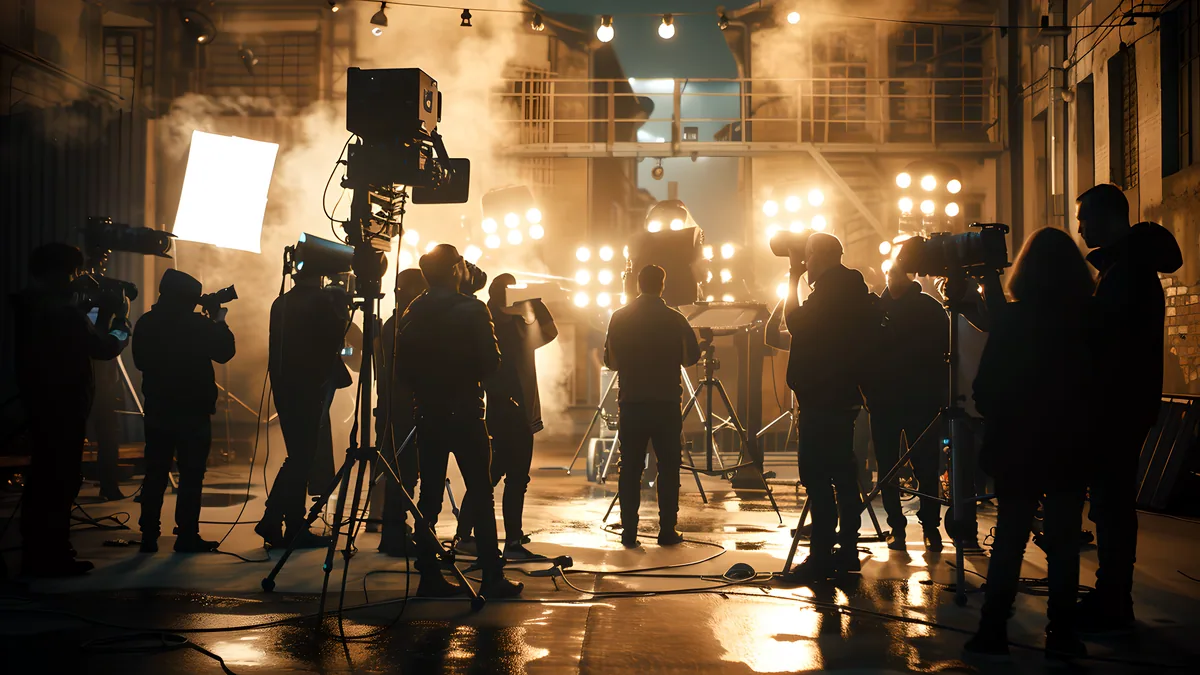
Two terms do the heavy lifting at the head of the chain. Great film directors are the people whose name sits on the finished picture, and Developing film is the trade name for the chemical bath that turns an exposed strip of negative into a stable image. Everything else on this page, from the sound department to the marketing office, exists to keep the chain moving between those two poles.
The craft of film, end to end
The craft of film, end to end, is a relay of 6 named stages: development, pre production, principal photography, post production, sound, and distribution. Each stage has an owner, a budget line and a deliverable, and the deliverable of one stage is the raw material of the next. A producer is the relay captain: the producer signs off every handoff and carries the schedule, which is why the word producer, not writer or director, sits on the industry's most visible job titles. The table below lists each stage, its deliverable and its typical share of a feature budget.
| Stage | Deliverable | Typical share of a UK feature budget |
|---|---|---|
| Development | Locked script and package | 5 to 10 percent |
| Pre production | Shot list, schedule, permits | 10 to 15 percent |
| Principal photography | Completed dailies, 3 to 5 weeks | 45 to 55 percent |
| Post production | Picture lock | 20 to 30 percent |
| Sound | Mixed final audio, 5.1 or 7.1 | 5 to 10 percent |
| Distribution | Release plan and print or file | 10 to 20 percent |
The percentages are planning figures from production accountants in England, and they hold across studio and independent pictures alike. Notice that the two biggest line items are shooting and post, which is why the chain fails most often in the middle rather than at the ends.
Development: where the film is born
Development is where the film is born, and it is the only stage that can produce nothing at all. A producer or studio green lights a project when the script, the cast package and the budget line up, and in England that decision usually lands with a production company attached to a broadcaster or a sales agent. The script itself passes 8 to 12 draft stages on a typical feature, and each draft costs money: a screenwriter in London charges a per page rate that is set by the Writers Guild of Great Britain, so every rewrite has a published price attached. Development also fixes the tone, the genre and the target audience, and a change to any of those after green light restarts the chain from the top. The most common development failure is a script that is strong on paper but impossible to shoot, which is why line producers read drafts for money before they read them for story.
Casting and the package
Casting turns the script into a package, and the package is what a distributor will actually pre sell. A casting director in England books auditions in waves: first the leads, then the supporting roles, then the ensemble, with each wave starting 6 to 8 weeks before the first shoot day. Once the two leads are signed, the project is called packaged, and a packaged deal is worth more on the market than the same script without names attached. The package also names the director, and a director with 2 or 3 festival laurels behind them will command a higher fee than a newcomer, which is the arithmetic the producer must balance against the rest of the budget.
Pre production: building the machine
Pre production builds the machine that makes the film, and it runs 3 to 6 weeks before the cameras roll. The director of photography surveys locations and fixes the lens kit, the production designer builds the sets or finds the real ones, and the production office produces the shooting schedule, a document that lays out 60 to 90 days of shooting in half day blocks of 6 hours each. In England the shoot must also clear location permits, and a single day on a public road in London needs a permit from the local authority plus a police liaison, a process that takes 4 to 6 weeks to arrange, which is why schedule and permits are planned in the same meeting. The call sheet, the daily instruction that tells every crew member where to be and when, is only meaningful once this machine is fully built.
Principal photography: shooting the picture
Principal photography is where the picture is made, and it is the most expensive 3 to 5 weeks of the entire project. A feature is shot in 30 to 60 days, and each day the unit captures dailies, the raw footage from that day, which is backed up twice on the set itself before anyone goes home. The camera department works in a fixed rhythm: the 1st assistant camera loads the magazine, the grip crew sets the light, the director blocks the scene, the 2nd unit rolls a safety take, and the 1st assistant camera logs the take. A day that runs over schedule by 2 hours eats into the next day, which is why the 1st assistant director, not the director, is the person with the loudest voice on set.
How green screen works on a movie
Green screen, which the crew calls a green box, is a seamless wall or floor of saturated green cloth, 12 metres wide on a large stage, in front of which the cast performs against nothing. The camera exposes the actors normally, and in the colour space the green sits far from any skin tone, so the compositor can key out the green in 3 passes and paint a background behind the actors. The key fails when the actor wears green, when hair catches the green light, or when the cloth ripples, which is why the art department irons the cloth every morning and the wardrobe department keeps a green ban list on set. Movies such as the superhero blockbusters of the 2010s built entire cityscapes this way, and the same technique now handles the backgrounds of a large share of prestige television shot in England. Blue screen is the older cousin of the same trick, used before green cloth became standard, and it survives today in aerial work, because the blue of the sky gives the key a second layer of contrast. The practical rule is simple: key against the colour the scene does not contain, and green is that colour in almost every stage scene.
Post production: assembling the film
Post production is where the film is assembled, and it runs 3 to 6 months after the last day of shooting. The editor cuts the dailies into a rough assembly, which is usually twice the length of the final film, then into a fine cut, and finally into a locked picture that no one is allowed to change. Colour grading follows the lock: the colourist matches every scene to the same temperature, and a single feature passes through 300 to 600 shots of individual grading in a typical session. The sound department works in parallel, laying the dialogue, the sound effects and the music into a final mix that is mastered in 5.1, 7.1 and stereo, and the mix is cut in 2 passes, one for dialogue intelligibility and one for impact. Visual effects shots, including every green screen composite, are delivered back to the editor as finished plates, and a feature now carries 100 to 800 of them depending on the genre. The final deliverable in England is a DCI compliant file for cinemas and a H.265 or H.264 master for broadcasters, and the master is archived at 2 copies in 2 separate vaults, because the file, not the physical print, is what a cinema now buys.
Problems that hit the chain, and where they hit
Problems that hit the chain arrive in the same places every time, and the industry has a vocabulary for each one. Weather stops an outdoor shoot for a whole day and pushes the schedule out by 2 days, and insurance covers the cost of the idle crew. A lead actor illness halts production and, on a big picture, costs the production 200,000 pounds a day in idle crew and stage. A script that is 25 pages over at the lock forces 3 extra shoot days and a reshoot budget of 50,000 pounds or more. A green screen key that fails in the grade returns the shot to the visual effects house at a rate of 2,000 to 6,000 pounds per shot. The film industry in England carries these costs inside the production insurance policy, which is why the policy is priced against the shoot schedule and not against the script, and why a schedule that is overplanned by 5 days is a cheaper risk than one that is not. The table below lists the 4 most expensive failure modes and the stage at which they surface.
| Failure mode | Stage it surfaces in | Typical cost to the production |
|---|---|---|
| Weather stoppage on an outdoor day | Principal photography | 1 full day, crew paid, 2 days schedule slip |
| Lead actor illness | Principal photography | 200,000 pounds per idle day on a large picture |
| Over long script at picture lock | Post production | 3 extra shoot days plus a 50,000 pound reshoot |
| Failed green screen key | Post production, visual effects | 2,000 to 6,000 pounds per returned shot |
The pattern behind the 4 rows is the same: the failure is cheap at the stage where it is created and expensive at the stage where it is discovered, which is why the chain invests so heavily in the early stages to prevent late discoveries.
Distribution: getting the film in front of people
Distribution is where the finished film meets the public, and it is a chain of its own with 3 links: the theatrical window, the home window and the international window. In England a feature opens in a 2 to 6 week theatrical window, playing in 100 to 400 screens at the top of its run, and the distributor buys the cinema time from the chain, which pays the production a percentage of the box office. The home window, streaming or physical, opens 4 to 9 months after the theatrical release, and the international sales agent, based in London for most UK pictures, sells the rest of the world in blocks of territories at a festival market such as the European Film Market in Berlin. A film that travels well earns back its distribution cost in 2 to 3 territories and profits in the rest, and the sales agent's fee is 10 to 15 percent of every deal. The final link is the archive, where the film enters the public record of English cinema, and the archive is what makes the next film, made with the same craft, end to end, worth funding in the first place.